
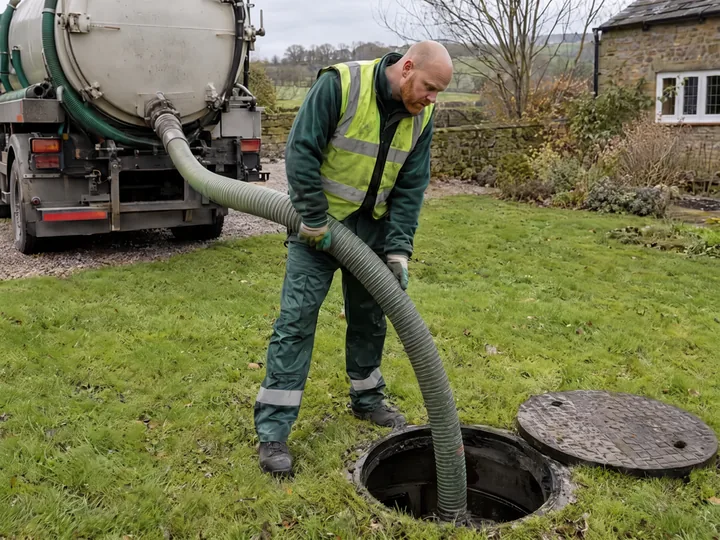
Most septic tanks need emptying around once a year, though it depends on tank size and how many people live in the home. In England, septic tanks must meet the general binding rules: domestic sewage only, no pollution, discharge through a drainage field, maintenance by a competent person and sludge removed by an authorised carrier.
Off-mains drainage on the edge of the moors
Not every home we look after is connected to the main sewer. Around Belmont, Edgworth, Harwood and into Rossendale, farmhouses, cottages and barn conversions on the edge of the West Pennine Moors often rely on a septic tank or small sewage treatment plant.
These systems work well when they are looked after, but they come with responsibilities that most town homeowners never need to think about.
How a septic tank works
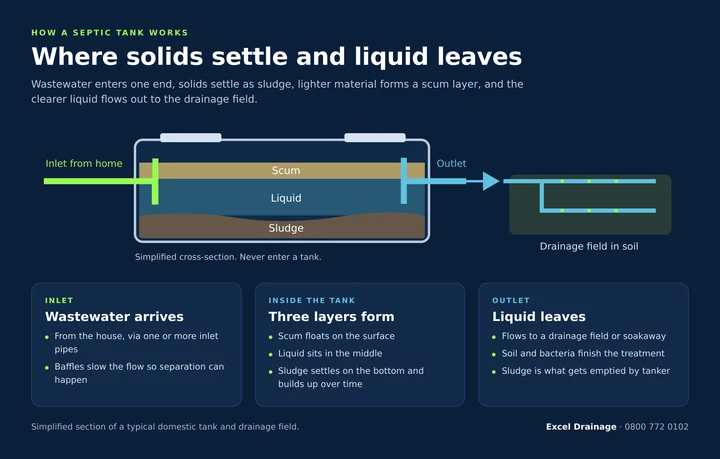
A septic tank is an underground tank that takes all the wastewater from the house. Solids sink to the bottom as sludge, lighter material such as fats floats to the top as scum, and the liquid in the middle flows out to a drainage field. A drainage field is a network of perforated pipes in trenches that lets the water soak slowly into the ground for further treatment.
A small sewage treatment plant, sometimes called a package treatment plant, works in a similar way but uses mechanical parts to treat the water to a higher standard.
How often should a septic tank be emptied?
As a general guide, most domestic septic tanks are emptied around once a year. The right interval for your home depends on:
- The size of the tank
- How many people live in the house
- How much water you use
- What goes down the drains, as fats and wipes fill a tank faster
Manufacturers usually give a recommended service interval for treatment plants, and you should follow it. If you are not sure, your engineer can check sludge levels and suggest a sensible schedule. Our septic tank emptying service covers this.
Signs your tank needs emptying sooner
- Slow drains or toilets across the house
- Gurgling from plugholes
- Smells near the tank or drainage field
- Wet, boggy or unusually green patches over the drainage field
- Sewage backing up into the house
The general binding rules in plain English
In England, the government sets out general binding rules for small sewage discharges. If your system meets them, you do not need an environmental permit from the Environment Agency. The full rules are on GOV.UK, but the key points for a septic tank discharging to ground include:
- Domestic sewage only, from toilets, bathrooms and kitchens
- No pollution of groundwater or surface water
- A daily volume limit of 2 cubic metres (2,000 litres) for discharges to ground
- Treatment through a drainage field. Effluent from a septic tank must not go directly into a watercourse such as a stream or ditch
- Correct installation and operation, to the relevant British Standard and the manufacturer's instructions
- Maintenance by a competent person
- Sludge removed by an authorised waste carrier
- Tell the buyer when you sell, in writing, that the property has a small sewage discharge, with a description of the system and its maintenance needs
- Proper decommissioning if the system is no longer used
There are further rules about distance from wells, springs, boreholes, protected sites and public sewers, and extra rules for new discharges that started on or after 2 October 2023.
What if my tank discharges straight to a stream?
This can happen on older rural properties. Under the rules, a septic tank must not discharge directly to surface water. If yours does, the usual options are to connect to the mains sewer where it is reasonable to do so, install a drainage field, or replace the tank with a small sewage treatment plant. If none of these is possible, you must apply for a permit. Check the GOV.UK guidance and take advice before changing anything.
Looking after your septic tank between empties
- Do not flush wipes, sanitary products, nappies or cotton buds
- Keep fats and oils out of the kitchen sink
- Use household cleaners in moderation, as strong chemicals can upset the natural treatment process
- Spread out heavy water use, such as several loads of washing in one day
- Keep roof and surface water out of the tank. Rainwater should go to a separate soakaway or surface water drain
- Do not drive or build over the tank or drainage field
- Keep records of when the tank was emptied and by whom
Keeping gutters and downpipes clear also helps rainwater go where it should. See our gutter cleaning service.
Buying or selling a home with a septic tank
If you are buying in Belmont, Edgworth, Harwood or Rossendale, ask the seller for details of the system, when it was last emptied and whether it meets the general binding rules. Your solicitor should ask too. A CCTV drain survey of the pipework leading to the tank is a sensible extra check, and our guide to drain surveys when buying a house explains more.
Privately owned septic tanks and the pipes serving them are the owner's responsibility, not the water company's.
Septic tank emptying around Belmont, Edgworth, Harwood and Rossendale
Excel Drainage empties septic tanks, checks soakaways and makes sure waste is disposed of properly. We cover Belmont, Edgworth, Harwood, Rossendale and the rest of our service area. Please mention access when you call, as rural lanes and tank positions vary.