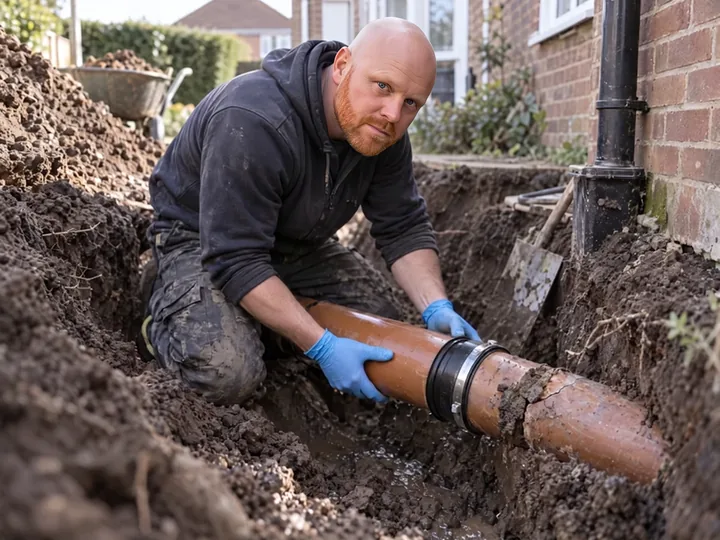
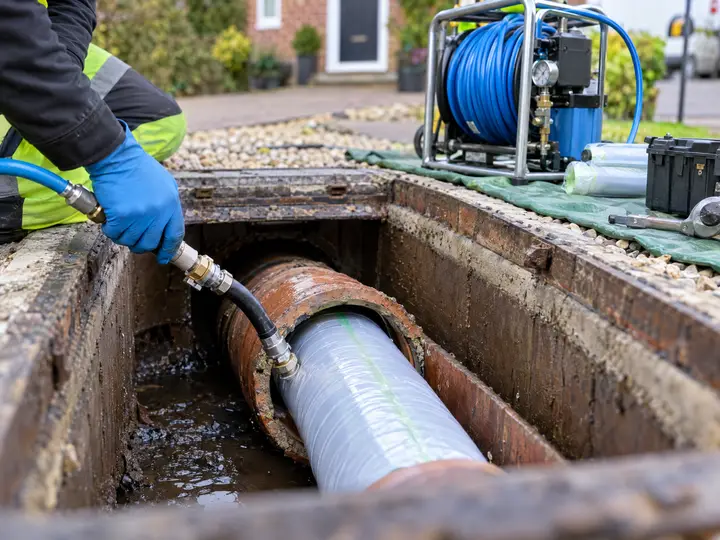
No-dig relining repairs a damaged drain from the inside by fitting a resin-soaked liner that hardens into a new pipe within the old one. It suits cracks, open joints and root damage without digging up drives or gardens. Excavation is needed when a pipe has fully collapsed, is badly misshapen, has sunk or needs re-routing.
Two ways to fix a damaged drain
When a CCTV survey shows a cracked or broken drain, there are two main ways to repair it. The traditional way is to dig down, cut out the damaged section and lay new pipe. The modern way, often called no-dig relining, repairs the pipe from inside using the existing access points.
In Bolton, Westhoughton and Harwood, many damaged drains sit under block-paved drives, patios, extensions and established gardens. That makes the choice between the two methods a big one for homeowners.
How no-dig drain relining works
The basic process is the same on most jobs:
1. Survey. A CCTV drain survey finds the defect and measures the pipe.
2. Clean. The drain is cleared with high-pressure jet cleaning, and any roots or scale are cut away.
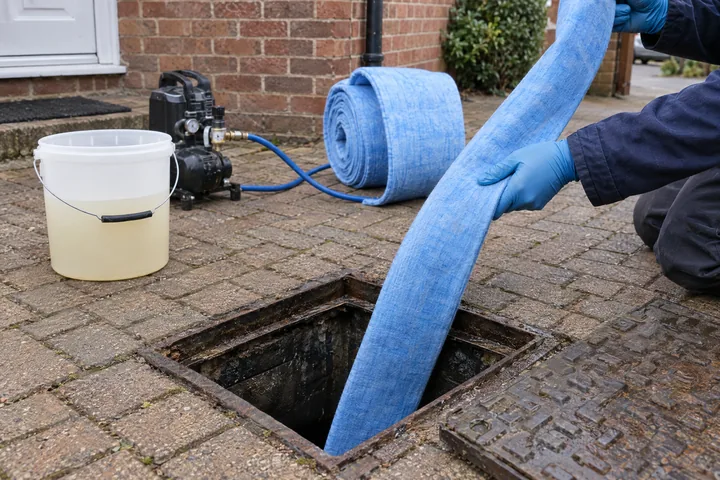
3. Line. A flexible liner soaked in resin is pushed or pulled into the pipe through an inspection chamber and inflated so it presses against the old pipe wall.
4. Cure. The resin hardens, creating a smooth, joint-free pipe inside the old one.
5. Check. A final camera inspection confirms the repair.
Short sections can be repaired with a patch liner over a single crack or joint. Longer runs can be lined end to end. See our drain relining service for more.
When relining is a good choice
Relining tends to suit:
- Cracks and fractures where the pipe still holds its shape
- Open or displaced joints, common in older clay drains
- Root intrusion, once the roots have been removed, because the liner seals the joints they got in through
- Drains under drives, patios, conservatories or extensions, where digging would mean lifting finished surfaces
- Porous or leaking pipes that need sealing
Benefits of relining
- Little or no digging, so gardens, paving and driveways stay as they are
- Usually less disruption and mess
- A smooth inner surface with fewer joints for roots and debris to catch on
- Often quicker to complete than excavation
When excavation is the better option
Relining is not the answer for every drain. Digging is usually needed when:
- The pipe has collapsed and there is no longer a clear path for a liner
- The pipe is badly deformed, for example older pitch fibre pipes that have flattened
- A section has sunk, so water sits in a dip. A liner follows the shape of the old pipe and will not correct the fall
- The drain needs re-routing, extending or a new connection
- Access is not possible from either end
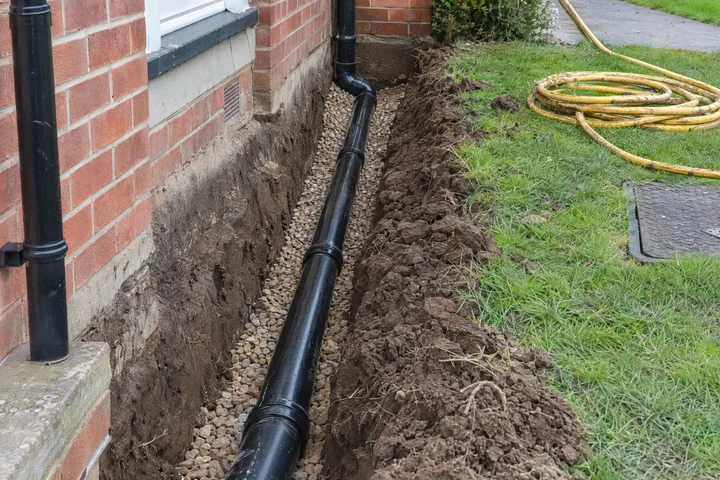
Our drain excavation and groundworks team handles these jobs and reinstates the ground once the new pipe is in.
Quick comparison
| Compared | No-dig relining | Excavation |
|---|---|---|
| Digging | Little or none | Yes |
| Surfaces disturbed | Usually none | Drive, patio or lawn lifted |
| Suits cracks and joints | Yes | Yes |
| Suits full collapse | Usually not | Yes |
| Corrects a sunken pipe | No | Yes |
| Allows re-routing | No | Yes |
How long does drain relining last?
Lining systems are designed for long service lives, but the actual life of any repair depends on the product used, how well it was installed and the condition of the drain around it. Ask your engineer which system they use and what guarantee applies to your job. We would rather not quote a lifespan we cannot back up.
Check who is responsible first
Before any repair, it is worth confirming the damaged section is yours. If the defect is in a shared sewer, United Utilities is normally responsible for it. Our guide on who is responsible for a blocked drain explains how to tell.
Planning an extension over a drain?
If you are planning an extension in Bolton or Westhoughton over or near a drain, building regulations apply, and building over or near a public or shared sewer normally needs agreement from United Utilities. Getting a survey and fixing any damage before the build is much easier than reaching the pipe afterwards.
Signs your drain may need a repair
- Blockages that keep coming back in the same place
- Sewage smells outside
- Damp patches or sunken areas in the garden or patio
- Rats around the property, which can get in through broken drains
- Slow drains across the house
If you notice these, a survey first means the repair is based on what is actually wrong. For more on blockages locally, see our Bolton blocked drains guide.
Drain repairs in Bolton, Westhoughton and Harwood
Excel Drainage carries out drain repairs, relining and excavation across Bolton, Westhoughton, Harwood and the rest of Greater Manchester. We will show you the camera footage and explain which option suits your drain, and why.